
Blogs

BOILER INSPECTION ESSENTIALS: WHAT EVERY FACILITY MANAGER SHOULD KNOW

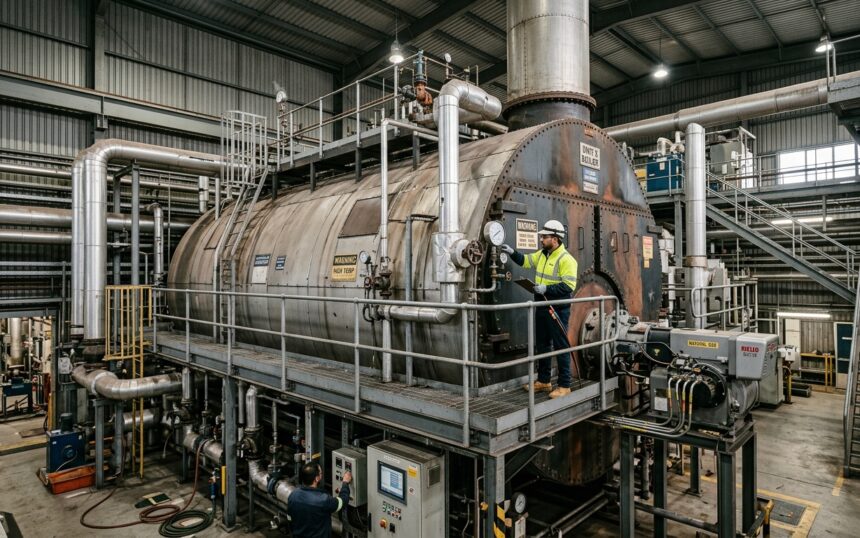
Gemini_Generated_Image_9447bl9447bl9447

A boiler inspection isn’t something most facility managers think about until it’s already on the calendar and someone’s asking whether the plant needs to shut down for it. That’s usually the wrong time to start thinking about it. A little preparation ahead of the visit, and a clear picture of what the inspector is actually checking, makes the difference between a smooth inspection and one that turns into a list of findings, delays, and repeat visits.


Here’s what facility managers actually need to know about how boiler inspections work in the UAE, what happens during one, and what tends to trip facilities up.

Regulatory Renewal Cycles for Boilers Operating in the UAE


Boiler and pressure vessel inspection requirements in the UAE are enforced at the emirate level, primarily through Dubai Municipality and Abu Dhabi Municipality, alongside Civil Defense oversight on the safety side. Under Dubai’s regulatory framework, boilers and pressure vessels are required to be inspected at installation and then at regular intervals, generally every 12 months, by a competent, accredited third-party inspector.


Inspections need to be carried out by providers accredited to ISO 17020, the international standard for inspection bodies, and recognized by local authorities such as Dubai Accreditation Centre (DAC) or the Emirates National Accreditation System (ENAS). Depending on the facility’s location and sector, ADNOC-approved status may also apply for oil and gas operations. A certificate issued after a passed inspection is what allows the boiler to legally continue operating until the next renewal cycle, and that certificate needs to be current and on file, not just completed at some point in the past.


The practical takeaway is simple: the annual cycle isn’t optional, and it isn’t flexible just because a facility is busy or mid-project. Missing a renewal window puts the boiler in a position where continued operation isn’t compliant, regardless of how well it’s actually running.

The Key Inspection Stages

A proper boiler inspection isn’t a single walk-around. It moves through several distinct stages, each checking something different.


  1. External inspection comes first, done with the boiler in operation where possible. The inspector checks the general condition of the shell, insulation, and casing, looks at piping and fittings for leaks or corrosion, and confirms that pressure gauges, water level indicators, and control systems are functioning and properly calibrated. This stage also covers general housekeeping and accessibility around the unit, since a boiler that’s hard to safely access is already a compliance issue on its own.
  2. Internal inspection requires the boiler to be shut down, cooled, and opened up. This is where the inspector examines waterside and fireside surfaces directly, looking for scale buildup, corrosion, pitting, and any signs of structural degradation that wouldn’t be visible from outside. Internal surfaces tell a very different story than external ones, since water chemistry problems and fireside deposits both develop out of sight.
  3. NDT (non-destructive testing) fills in what visual inspection alone can’t confirm. Ultrasonic thickness testing checks actual wall thickness against the boiler’s design minimum, which is the real measure of remaining service life on a pressure component. Depending on findings, additional methods like magnetic particle testing may be used to check welds and stressed areas for surface cracking.
  4. Valve and safety device testing closes out the inspection. Safety relief valves have to be tested and, if due, recertified, since a valve that doesn’t lift at the correct set pressure is a direct safety failure regardless of how good the rest of the boiler looks. Water level controls, low-water cutoffs, and pressure controls all get functionally verified as well, because these are the systems that are supposed to catch a problem automatically if something goes wrong during operation.

Common Causes of Failed Inspections


A few issues show up again and again, and most of them are preventable with basic maintenance discipline.

  1. Scale and corrosion from poor water treatment is one of the most frequent findings. Untreated or poorly managed feedwater leads to scale buildup on internal surfaces and accelerated corrosion, both of which reduce efficiency and, eventually, structural integrity. This is almost always traceable to a water treatment program that’s been neglected or never properly established.
  2. Non-functional or out-of-date safety valves come up constantly. A relief valve that hasn’t been tested on schedule, or one that’s stuck or improperly set, is an automatic finding, and it’s one of the fastest ways to fail an inspection outright since it’s a direct safety issue, not a minor deficiency.
  3. Missing or incomplete documentation trips up more facilities than people expect. Inspectors need to see maintenance records, previous inspection certificates, water treatment logs, and repair history. A facility that’s actually maintained the boiler well but can’t produce the paperwork to prove it often ends up with the same result as one that hasn’t maintained it at all.
  4. Accessibility and housekeeping issues are a smaller but recurring problem: blocked access panels, obstructed gauges, or general clutter around the boiler room that makes a proper inspection difficult to carry out safely.

PTC is an ADNOC approved TPI Agency providing ISO 17020-accredited boiler and pressure vessel inspection services across the UAE, covering external, internal, NDT, and safety valve testing

What Facility Managers Should Prepare Before the Visit


A few days of preparation goes a long way toward a clean inspection.


Pull together the full documentation set in advance: previous inspection certificates, maintenance logs, water treatment records, and any repair history since the last inspection. Confirm the boiler can actually be taken offline and cooled in time if an internal inspection is scheduled, since rushing this step compromises both safety and inspection quality.


Walk the boiler room yourself beforehand. Clear access panels, make sure gauges and controls are visible and unobstructed, and address any obvious housekeeping issues before the inspector arrives. If safety valves are due for testing or recertification, get that scheduled ahead of time rather than discovering it during the visit.


Finally, have someone from the facility on hand who actually knows the equipment’s operating history. An inspector who can ask questions and get real answers moves faster and more accurately than one working with an empty room and no context.

Staying Ahead of the Cycle


None of this is complicated once it’s built into a routine. The facilities that pass inspections cleanly aren’t the ones with newer boilers, they’re the ones treating maintenance and documentation as an ongoing responsibility rather than something to catch up on right before the inspector shows up.


PTC is an ADNOC approved TPI Agency providinges ISO 17020-accredited boiler and pressure vessel inspection services across the UAE, covering external, internal, NDT, and safety valve testing.. Reach out to schedule your next inspection or get ready for one.

#BoilerInspection #PressureVesselInspection #UAECompliance #FacilityManagement #ISO17020 #NDTTesting #IndustrialSafety #DubaiMunicipality #PTCInspect #InspectionReadiness

Cart (0 items)
Select the fields to be shown. Others will be hidden. Drag and drop to rearrange the order.
  • Image
  • SKU
  • Rating
  • Price
  • Stock
  • Availability
  • Add to cart
  • Description
  • Content
  • Weight
  • Dimensions
  • Additional information
Click outside to hide the comparison bar
Compare