
Blogs

THE TRUE COST OF NON-COMPLIANCE: LESSONS FROM REAL INDUSTRY FAILURES

THE-TRUE-COST-OF-NON

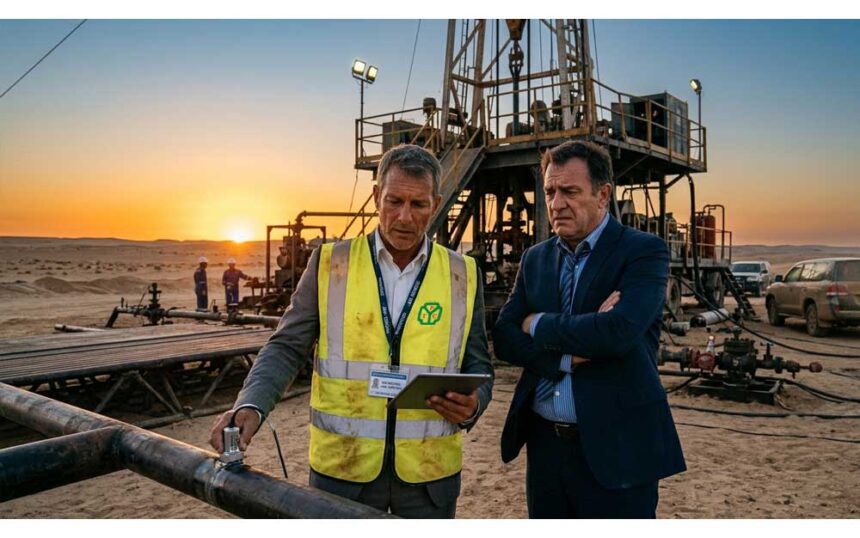
Every skipped inspection feels like a small decision at the time. A boiler that’s due for its annual check gets pushed back three weeks because the plant’s running flat out. A weld inspection gets waved through because the schedule can’t absorb a delay. None of it feels reckless in the moment. It’s only later, when something actually goes wrong, that the real cost of that small decision shows up, and by then it’s rarely small anymore

The Real Cost of Skipped or Delayed Inspections


The financial cost is usually the first thing people think about, and it’s real. An equipment failure that a routine inspection would have caught almost always costs more to fix after the fact than the inspection itself ever would have. Unplanned shutdowns halt production, emergency repairs come at a premium over scheduled ones, and in the worst cases, damaged equipment has to be replaced entirely rather than repaired. None of that accounts for lost output while the facility is down, which on a large industrial asset can dwarf the repair bill itself.


The safety cost is the one that actually matters most, and it doesn’t always show up as a dramatic headline event. A pressure vessel operating past its safe margin, a corroded pipeline segment nobody caught in time, a safety valve that was never recertified, these things put real people at risk long before they become a visible incident. And once an incident does happen, the safety cost becomes permanent in a way the financial cost never is.

Deferred inspection always looks cheaper in the short term, and that’s exactly what makes it dangerous. The real cost only shows up later, and by then it’s rarely just financial.

What Failure Patterns Actually Look Like


Without pointing to any specific company or incident, the patterns behind industrial failures tend to repeat across the industry in remarkably consistent ways.


A piece of equipment operates slightly past its inspection due date because production can’t afford the downtime right now. Nothing happens for a while, because most deferred inspections don’t lead to immediate failure, which quietly reinforces the idea that skipping this one was fine. Then a corrosion rate that was never properly tracked accelerates faster than anyone expected, or a weld that was never fully NDT-tested develops a crack under normal operating stress, and the equipment fails at a moment nobody predicted.


In nearly every pattern like this, the failure wasn’t sudden from the equipment’s point of view. It was the visible endpoint of a gap that had existed, unaddressed, for months or years. The inspection that would have caught it wasn’t skipped once. It was skipped, then skipped again, until deferring became the default rather than the exception.

The ROI Case for Consistent Third-Party Inspection


Set against all of that, the cost of a consistent, properly scheduled third-party inspection program looks small. Inspections are budgeted, planned, and scheduled around operations rather than forced in as an emergency response. They give facilities early warning on developing problems, corrosion trending toward a critical threshold, a weld that needs attention, a valve drifting out of calibration, while there’s still time to address it on a normal maintenance timeline instead of an emergency one.


There’s also a compounding value that’s easy to overlook: a consistent inspection record becomes a form of documented protection in itself. When equipment does fail despite good faith efforts, and sometimes it will, a facility with a clean, current inspection history is in a fundamentally different position with insurers, regulators, and courts than one that let its schedule slip. The inspection isn’t just catching problems. It’s building a record that protects the facility when something outside anyone’s control still goes wrong.

PTC helps UAE facilities stay ahead of compliance requirements with consistent, scheduled third-party inspection. Reach out before a deferred inspection becomes an expensive lesson

Regulatory Penalties Under UAE Frameworks


The regulatory side of this in the UAE isn’t abstract, either. Under OSHAD-SF, which governs occupational safety and health across Abu Dhabi, penalties for non-compliance can range from AED 5,000 up to AED 1,000,000 per violation, with unannounced audits and shutdown orders available for serious cases. Failing to report a serious incident within OSHAD’s required window is itself treated as a separate violation, compounding whatever penalty comes from the underlying issue.


At the federal level, MoHRE enforces workplace safety obligations under Federal Decree-Law No. 33 of 2021, with violations carrying fines generally in the same AED 5,000 to AED 1,000,000 range, and MoHRE has moved toward more frequent, data-driven inspections in recent years rather than fewer. Dubai has its own layered requirements on top of the federal baseline, with contractor-specific penalties reaching up to AED 200,000 and license suspension for serious violations.


None of these frameworks are designed to be punitive for their own sake. They exist because the underlying safety failures they’re meant to prevent are expensive, dangerous, and largely avoidable with consistent inspection practice.


The Simple Math


Deferred inspection always looks cheaper in the short term, and that’s exactly what makes it dangerous. The real cost only shows up later, and by then it’s rarely just financial. Consistent third-party inspection isn’t an added expense on top of operating a facility safely. It’s one of the cheapest ways there is to avoid finding out, the hard way, what skipping it actually costs.


PTC helps UAE facilities stay ahead of compliance requirements with consistent, scheduled third-party inspection. Reach out before a deferred inspection becomes an expensive lesson.

#IndustrialCompliance #OSHAD #MoHRE #ThirdPartyInspection #UAERegulations #IndustrialSafety #RiskManagement #InspectionROI #PTCInspect #WorkplaceSafetyUAE

Cart (0 items)
Select the fields to be shown. Others will be hidden. Drag and drop to rearrange the order.
  • Image
  • SKU
  • Rating
  • Price
  • Stock
  • Availability
  • Add to cart
  • Description
  • Content
  • Weight
  • Dimensions
  • Additional information
Click outside to hide the comparison bar
Compare