
Blogs

Understanding API 653: A Practical Guide to Above-Ground Storage Tank Inspection

Understanding API 653:

If you operate above-ground storage tanks, you’ve heard the term API 653 more times than you can count. But a surprising number of tank owners and operators still aren’t entirely clear on what it actually covers, when it kicks in, or how it’s different from the code their tank was originally built to. That confusion gets expensive fast, especially once a tank has been in service for a few years and inspection timing starts to matter.


Here’s a straightforward breakdown of what API 653 actually does, when inspections are due, what inspectors commonly find in this region, and what happens if you push inspections down the road.

API 653 vs. Original Construction Codes


Most steel above-ground storage tanks are built to API 650 (or its older version, API 12C). That construction code governs how a tank is designed and built in the first place: shell thickness, foundation, roof design, welding requirements, all of it.


API 653 takes over once the tank is in service. It’s not a construction standard, it’s an in-service standard. It covers inspection, repair, alteration, relocation, and reconstruction of a tank after it’s already been built and put into operation. So while API 650 answers the question “was this tank built correctly,” API 653 answers a different question: “is this tank still fit to keep operating safely, and what needs to happen if it isn’t.”


This distinction matters because a tank can be perfectly compliant with its original construction code and still fail an API 653 inspection years later, simply because corrosion, settlement, or wear have changed its condition since the day it was built.

Inspection Intervals and What Triggers an Early Inspection


API 653 lays out a tiered inspection schedule based on tank condition and risk, not just a flat calendar.

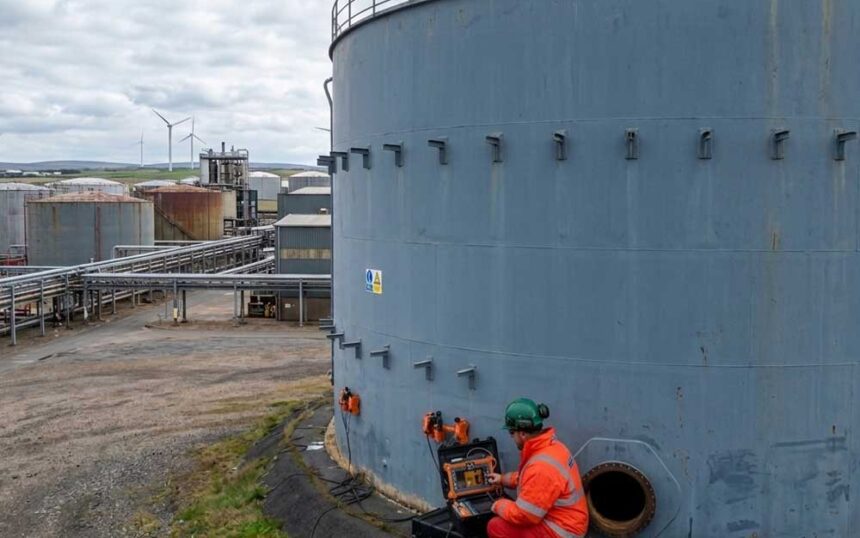
  • Routine in-service inspections happen monthly, done by facility personnel who know the tank and its contents. These are basic visual checks: looking for staining, leaks, coating issues, or anything that looks off around the shell, foundation, and containment area.
  • External inspections by a certified API 653 inspector are due at least every five years, or sooner if the tank's calculated corrosion rate suggests a shorter remaining life.
  • Internal inspections, which require taking the tank out of service, are typically due within ten years of the tank going into operation, though this interval can be extended if the tank has certain safeguards in place, such as a double bottom with leak detection. After that, the interval is generally set based on corrosion rate calculations rather than a fixed number.

Several things can trigger an inspection earlier than scheduled: a suspected leak, visible shell distortion, foundation settlement, a change in the product being stored, damage from an external event, or results from a prior inspection that flagged a faster-than-expected corrosion rate. If any of these show up, waiting for the next scheduled date isn’t really an option.

API 653 certification and practical experience are specialized capabilities, and not every inspection company has inspectors with both. PTC has qualified API 653 inspectors with relevant field experience, giving our clients the technical depth required to assess tank integrity with confidence.

Common Findings in UAE Tank Inspections


The operating environment here creates its own set of recurring issues. High ambient temperatures, humidity along the coast, and sand or dust exposure inland all play a role in what inspectors typically find.


Coating and lining breakdown shows up often, particularly on external shells exposed to prolonged UV and heat. Once coating fails, corrosion accelerates underneath it, sometimes well before it’s visible from the outside. Floor plate corrosion is another frequent finding, especially in older tanks with earlier-generation bottom designs, or where drainage around the tank pad hasn’t been well maintained.


Foundation and settlement issues also come up regularly, particularly in tanks built on reclaimed or sandy ground. Uneven settlement puts stress on the shell and roof structure in ways that aren’t always obvious during a quick visual check. And on tanks storing certain product types, internal lining degradation and localized pitting are common enough that they’re almost expected by the time a ten-year internal inspection comes around.

The Compliance Risk of Delaying Inspections


Pushing an inspection past its due date doesn’t just risk a regulatory citation, though that’s real too. It changes the entire risk profile of the tank. Corrosion doesn’t pause because an inspection got postponed, and by the time a delayed inspection finally happens, the finding is often worse than what a routine one would have caught, along with a more expensive repair.


There’s also the insurance and liability side. If a tank experiences a failure or environmental release after a missed or overdue inspection, that gap in documentation becomes a serious liability question, regardless of whether the missed inspection would have actually caught the issue in time.


And in many jurisdictions, an overdue inspection can affect a facility’s operating permits or a tank’s authorization to remain in service, which turns a maintenance issue into an operational one almost overnight.


Keeping It Simple


API 653 isn’t complicated once you separate what it actually governs from what your original construction code covered. The schedule is built around risk, not convenience, and the cost of staying on top of it is almost always lower than the cost of catching up after something’s gone wrong.

PTC provides API 653 inspection services for above-ground storage tanks across the UAE. API 653 certification and practical experience are specialized capabilities, and not every inspection company has inspectors with both. PTC has qualified API 653 inspectors with relevant field experience, giving our clients the technical depth required to assess tank integrity with confidence. Reach out to find out where your tank stands.

#API653 #StorageTankInspection #AbovegroundStorageTanks #TankIntegrity #OilAndGasUAE #IndustrialInspection #CorrosionManagement #API650 #PTCInspect #UAECompliance

Cart (0 items)
Select the fields to be shown. Others will be hidden. Drag and drop to rearrange the order.
  • Image
  • SKU
  • Rating
  • Price
  • Stock
  • Availability
  • Add to cart
  • Description
  • Content
  • Weight
  • Dimensions
  • Additional information
Click outside to hide the comparison bar
Compare